
- October 13, 2026
- admin
- 0
You turn the heat on for the first time this fall, and the house smells like something is burning. In most homes it’s dust, and it clears on its own.
A dusty, warm, slightly burnt smell for the first few hours of the heating season is normal. Dust settles on the burners and heat exchanger over the summer, and it burns off when the furnace fires. Rotten eggs, hot plastic, or any smell that lasts past those first few hours or keeps getting stronger isn’t normal.
What Does Your Furnace Smell Like?
Match the smell to a row. Some are normal on a first start. A few mean you get out first and call after.
| What You Smell | Possible Cause | What You Can Do | Who to Call / When |
|---|---|---|---|
| Dusty, like a hot toaster, on the first start of the season | Summer dust burning off the burners and heat exchanger | Run the fan, crack a window, and see if it fades within a few hours | Call if it hasn't faded in a few hours |
| Burning smell that gets stronger, or hot plastic | Possible overheating: wire insulation, a clogged filter, or something stored too close to the furnace | Turn the furnace off at the thermostat and leave it off. Don't restart it to test | Call Anthem before running it again |
| Electrical, like a hot wire | Possible overheated wiring or a struggling blower motor | Shut the furnace off at the thermostat and at the breaker | Call Anthem before you turn it back on |
| Rotten eggs or sulfur | The odorant added to natural gas and propane, so a possible leak | Leave the house right away. Don't touch switches, use a phone inside, or light anything | Call 911 and your gas utility or propane supplier from outside, then Anthem |
| Musty, like damp laundry or dirty socks | Possible moisture in the ducts, on the AC coil, or on a humidifier pad after summer | Replace the filter, run the fan, and look for standing water. Standing water near the coil or drain pan needs attention right away | Call if it lingers, or right away if you find standing water |
| Oily or like hot metal, during the first run of a newly installed furnace | Manufacturing residue can burn off a new unit | Ventilate the room. It should fade within the first few cycles | Call Anthem or your installer if it doesn't fade or seems off |
| Sharp fumes, or headaches while the furnace runs | A possible combustion or venting problem. Carbon monoxide has no smell | Get everyone outside into fresh air, even if no alarm is sounding | Call 911 first, then Anthem |
Not sure what you're smelling? If it's strange, strong, or hasn't faded after a few hours, turn the furnace off and have a technician look at it before you keep running it.
Why the first start of the season smells
Your furnace sits idle through a long Iowa summer. Dust settles on the burners, the heat exchanger, and inside the ducts. The first time the burners fire, that dust cooks off and the smell rides the air out of every vent.
For most homes it fades within a few hours. You’ll notice it most on the first long heat cycle, and it gets weaker each time after that. If it hasn’t faded after a few hours, or it’s getting stronger, treat it as a problem instead of waiting it out.
How to get ahead of it
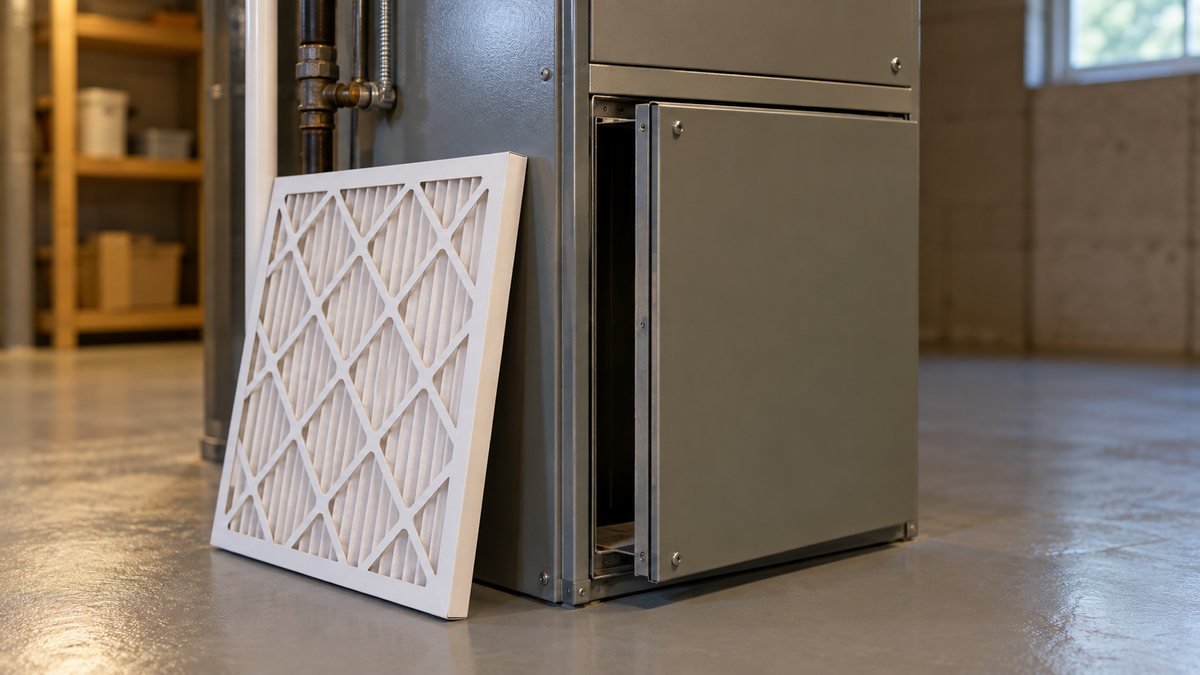
Change the filter before that first start, since a loaded filter adds to the smell. Our guide to choosing a furnace filter covers what to buy. Then run the furnace for an hour or two on a mild fall afternoon with a window cracked. The dust burns off then, not on the first freezing night when the house is sealed up. Stay home while it runs, and shut it off instead of finishing the test if you notice a burning plastic, electrical, or gas smell.
Clear anything stored near the furnace while you’re at it. Paint cans, cardboard boxes, and laundry piled against the cabinet can add their own smell, and some are a fire risk.
A burning or hot plastic smell
If a burning smell gets stronger instead of fading, it isn’t dust. A hot plastic smell can point to overheating wire insulation or another electrical problem, and changing a filter can’t rule that out. Other possibilities are a clogged filter that restricts airflow so the furnace runs hot, a toy, sock, or paper that slipped into a duct, or a blower motor that’s wearing out.
Turn the furnace off at the thermostat and leave it off until a technician has inspected it. You can look for anything stored against the furnace or lying in the registers, but don’t restart the furnace to see whether the smell comes back. Our guide on what to do if your furnace breaks covers the safe checks you can make first.
An electrical smell
A hot-wire smell, like a hair dryer that’s run too long, can point to an electrical problem, such as a blower motor that’s working too hard or a wire that’s overheating. Shut the furnace off at the thermostat and at the breaker, and leave it off. A technician needs to look at this one before you run the furnace again.
A rotten egg smell means leave first
Natural gas and propane don’t have a smell of their own. Utilities add an odorant that smells like rotten eggs or sulfur so a leak is easy to notice. If you smell it near the furnace or anywhere in the house, treat it as a gas leak.
Leave the house right away. Don’t turn lights on or off, don’t use a lighter or a phone inside, and don’t try to find the source. Call 911 and your gas utility or propane supplier from outside or from a neighbor’s home. Once the utility says the house is safe, Anthem’s 24-hour emergency HVAC service can look at the furnace.
A musty or dirty sock smell
A damp, musty smell usually has little to do with the flame. Many homes with central air have a cooling coil sitting in the same ductwork, and it collects moisture all summer. Moisture and buildup on the coil, the drain pan, or a humidifier pad that stayed damp can all add odor, and your first heating cycle pushes that air through the house. A musty smell alone doesn’t mean there’s mold.
Replace the filter and run the fan for a while, though that won’t fix the source. If you have a whole-home humidifier, check the pad and the drain for standing water. Our post on whole-home humidifiers explains how they work. Standing water around the coil or drain pan needs attention right away, so call a technician if you find any. If the smell lingers, have a technician look at the coil and the ducts.
What about carbon monoxide?
Carbon monoxide has no smell. A furnace can produce it while the house smells completely normal, so your nose tells you nothing either way. A working carbon monoxide alarm does. Test yours before the first cold night. If one sounds, get everyone outside, call 911 from outside, and don’t go back in until you’re told it’s safe. Leave if anyone has a headache, dizziness, or nausea while the furnace runs, even if the alarm is silent. Our guide to carbon monoxide and your furnace covers where alarms belong.
Before the first cold night
- Replace the furnace filter.
- Clear boxes, paint, and laundry from around the furnace.
- Test your carbon monoxide alarms.
- Run the furnace for an hour or two on a mild day with a window cracked, and shut it off if a concerning smell shows up.
- Make sure the registers are open and nothing has dropped inside.
Frequently Asked Questions
Is it normal for a furnace to smell when you first turn it on?
Yes. A dusty or slightly burnt smell is normal on the first start of the season, because dust that settled on the burners and heat exchanger over the summer burns off. Burning plastic, strong chemical, electrical, or rotten egg smells aren’t normal.
How long should the burning dust smell last?
Usually within a few hours, and it should get weaker with each heating cycle. If it hasn’t cleared after that, or it gets stronger, turn the furnace off and have it checked.
Why does my furnace smell like burning plastic?
Something may be overheating, including wire insulation, which a filter change can’t rule out. Other causes are a clogged filter, an object near or inside the furnace, or a failing blower motor. Turn the furnace off, leave it off, and call for service before you run it again.
What should I do if my furnace smells like gas?
Leave the house right away, and don’t touch switches or flames or use a phone inside. Call 911 and your gas utility or propane supplier from outside or from a neighbor’s home. Don’t go back in until you’re told it’s safe.
Can a furnace smell mean carbon monoxide?
Carbon monoxide has no smell, so you can’t rely on your nose. Sharp or exhaust-like fumes can go with a combustion problem, so get outside if anyone has a headache, dizziness, or nausea, even if no alarm is sounding. If an alarm does sound, get everyone out and call 911 from outside. A working carbon monoxide alarm is the dependable warning.
Why does my furnace smell musty?
Moisture on the cooling coil, in the drain pan, or on a humidifier pad can cause it, and a musty smell alone doesn’t mean mold. A filter change and running the fan won’t fix the source. Call if the smell lingers, and call right away if you find standing water around the coil or drain pan.
What to do, by smell
A dusty smell that fades within a few hours is nothing to worry about. Burning plastic, a hot-wire smell, or any smell that stays or gets stronger means shut the furnace off and arrange service before you run it again. Rotten eggs, or headaches and dizziness while the furnace runs, mean leave the house and call 911.
A yearly tune-up can help identify problems before the heating season starts, because a technician checks the burners and the parts around them. Read why furnace tune-ups matter more in Iowa, or ask about the Comfort-Shield maintenance plan.
Anthem serves Central Iowa from Bondurant and Grinnell. Schedule furnace service with Anthem Heating & Cooling today.