
- October 17, 2026
- admin
- 0
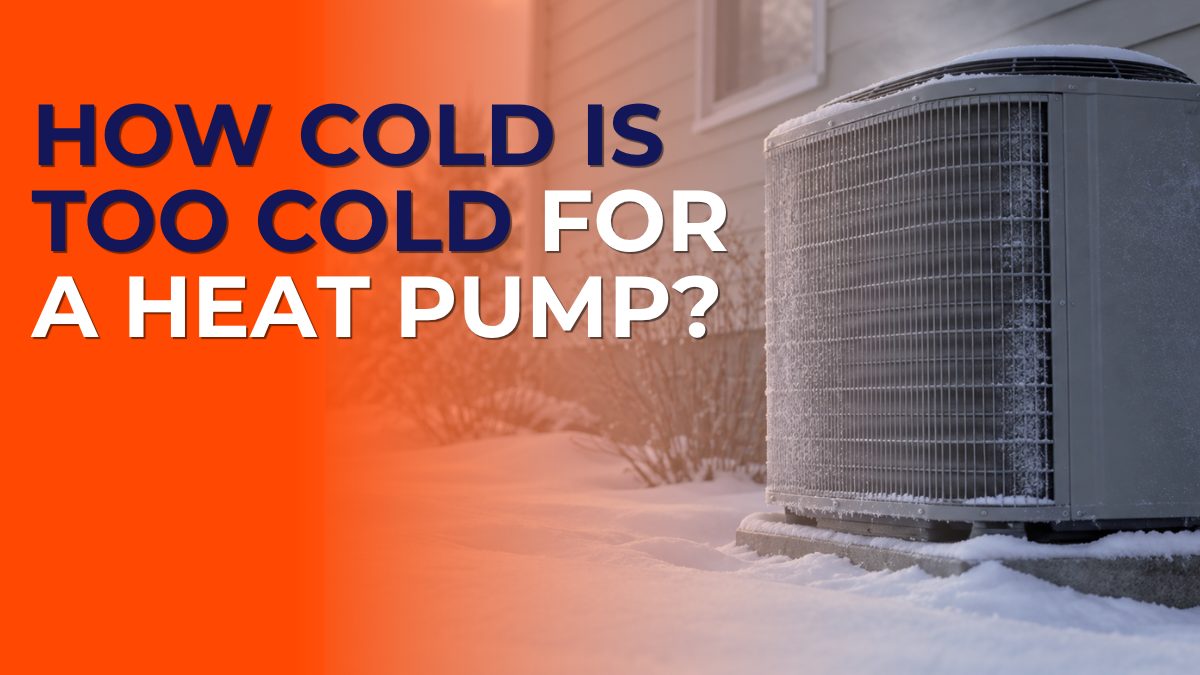
Every Iowa homeowner who has considered a heat pump has heard the same warning: they quit when it gets really cold. That one line keeps plenty of good systems from ever being quoted.
A modern cold-climate heat pump keeps heating well below zero. It doesn’t suddenly lose the ability to make heat just because the temperature crosses 20, 10, or even 0 degrees.
What happens is gradual. As the outdoor temperature falls, the heat pump has to work harder to extract heat. Eventually its available heating capacity falls while your home’s heat loss keeps climbing. The temperature where those two lines cross is your balance point.
Why “how cold is too cold” is the wrong question
A furnace doesn’t lose heating capacity just because the air outside got colder. A heat pump works differently, because it moves heat instead of burning fuel to create it.
There’s still heat in cold air, even well below zero, and the unit’s job is to collect it and bring it inside. The colder it gets, the less there is to collect and the harder the system works for it.
What Your Heat Pump Is Doing as the Temperature Drops
Some of the things heat pumps do in winter look strange if you’re used to a furnace.
| Outside Temperature | What the Heat Pump Is Doing | What You Notice Inside | Is Something Wrong? |
|---|---|---|---|
| 45 degrees and up | Heating easily, running long and slow | Steady, mild air from the vents | Normal, this is where a heat pump is especially efficient |
| 45 down to 20 | Working harder, longer cycles | Vent air feels cooler than a furnace | Normal, it is meant to feel that way |
| 20 down to zero | Output falling, may reach your balance point | Cooler vent air; backup heat may start helping on the coldest hours | Normal if the system was designed to use backup here |
| Below zero | Still making heat, backup carries more of the load | Longer backup runs, higher bills on those days | Normal during a subzero snap |
| Any temperature, briefly | Defrost cycle clearing the outdoor coil | Steam outside, and possibly cooler air inside for a few minutes | Normal, periodically in cold, damp weather |
Not sure whether what you’re seeing is normal? That’s something a technician can check.
Request ServiceYour home’s balance point
Your balance point is the outdoor temperature where the heat pump’s output equals your home’s heat loss. Above it, the heat pump handles everything on its own. Below it, the heat pump alone may no longer be able to keep up with the home’s full heating load.
It isn’t a fixed number, though, which is why it’s necessary to actually take a look at your setup before running the calculations. A tight 2018 build in Ankeny and a drafty 1940s house in Grinnell can run the same equipment and have very different balance points. Insulation, windows, air sealing, and how the system was sized all move it.
The goal is to size the system so the heat pump handles most of the winter on its own, without leaning on backup heat any more than necessary.
What backup heat actually is
Two setups are common in Iowa homes.
- Electric resistance strips built into the air handler. They work anywhere and they’re simple, but electric heat is the expensive way to warm a house. If the system spends a lot of time running on resistance heat, though, you’ll notice it on the electric bill.
- A gas furnace paired with the heat pump, usually called a dual fuel or hybrid system. The heat pump handles the milder weather, and the furnace takes over at a switchover temperature set for that house and its fuel prices. That suits a lot of Central Iowa homes, because we get long mild shoulder seasons and real subzero stretches in the same winter.
Dual fuel needs a thermostat that knows how to switch between the two, and a switchover point set for your house and your fuel prices. Ask your contractor what temperature that switchover is set to. Leaving it at the factory or thermostat default may not be the cheapest choice for your house. Our guide to the best thermostat settings for Iowa homes covers the wider picture.
Defrost cycles look alarming and are not
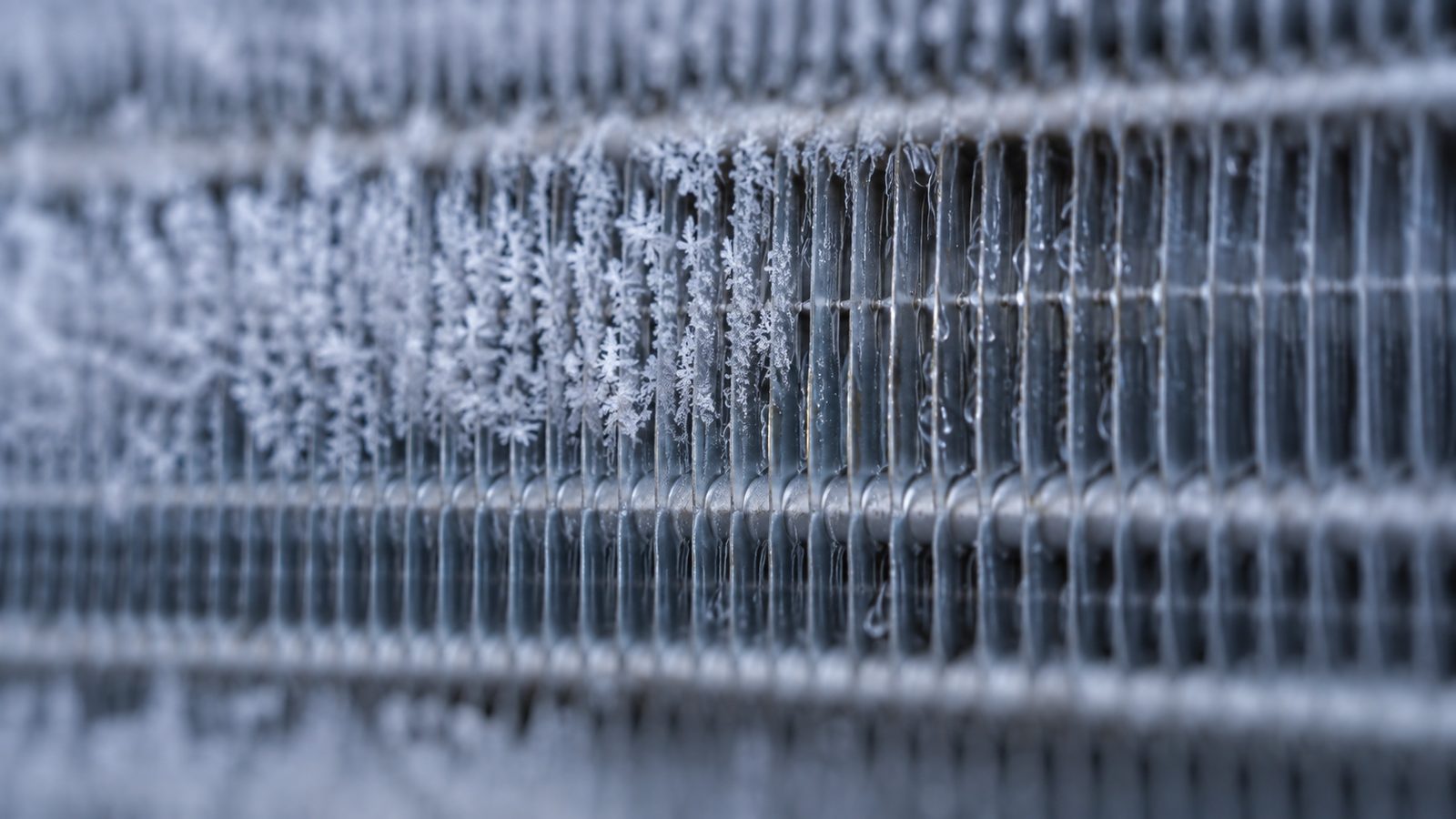
In cold, damp weather, frost builds on the outdoor coil. The system reverses itself periodically to melt that frost off, which takes a few minutes.
While it happens you may see steam rolling off the outdoor unit and hear the sound change. Depending on the system and its backup heat, you may also notice cooler air from the vents for a few minutes. People sometimes see the steam and call it in as a fire. It’s the most common “my heat pump is broken” call that isn’t a breakdown.
What isn’t normal is the unit sitting encased in solid ice, running defrost constantly, or never clearing at all.
When cold-weather behavior is a real problem
- The outdoor unit is buried in solid ice rather than light frost, and never clears.
- Backup heat runs constantly at temperatures in the twenties and thirties.
- The house loses ground on a cold day and never catches back up.
- The outdoor unit is drifted over with snow, or sits too low to shed it.
- Bills jump sharply in a month that wasn’t unusually cold.
If you’re seeing one of those, the cold weather probably isn’t the whole story. The system may need its airflow, refrigerant charge, defrost controls, sizing, or backup-heat settings checked.
What to ask before you put one in an Iowa home
- What is this unit’s heating output at low outdoor temperatures, not just its nameplate rating? The performance data lists capacity at several temperatures, and the cold ones are what matter in January.
- At roughly what outdoor temperature do you expect this particular system to need help in my house?
- If the heat pump can’t keep up, what turns on next? And what is that going to cost me to run?
- If it’s dual fuel, where is the switchover set, and can it be changed later?
- Where will the outdoor unit sit, and how far above the ground?
A good contractor should be able to answer those questions with actual performance data and a load calculation for your house. If you’re weighing a heat pump against replacing a furnace outright, our post on the difference between HVAC repair and replacement is a useful companion.
Mini splits are heat pumps too
All of the above applies to ductless systems, which are heat pumps in a different package. If that’s the direction you’re leaning, we’ve covered what to know before installing a mini split and the myths about mini splits in cold climates. The full picture sits on our ductless mini split systems page.
Common questions about heat pumps in cold weather
How cold is too cold for a heat pump?
It depends on the unit. Many cold-climate models can keep running below 0°F, but the useful question is how much heating capacity that particular model still has at those temperatures.
Do heat pumps work in Iowa winters?
Yes, when the system is sized for the house and paired with the right backup. Iowa’s long mild shoulder seasons are where a heat pump saves the most, and the subzero stretches are what the backup exists for.
Why is the air from my vents cooler than it was with a furnace?
A heat pump delivers heat at a lower temperature over longer cycles. It feels cooler against your hand while still holding the house at your thermostat setting. Nothing is wrong.
Why is my outdoor unit steaming?
It’s probably in defrost. Steam coming off the outdoor coil for a few minutes is normal. A coil that stays buried in ice is not.
What does auxiliary heat on my thermostat mean?
It means the system has brought on backup heat to help the heat pump. That can happen during very cold weather or during a defrost cycle.
Is a dual fuel system worth it in Central Iowa?
For a lot of homes, yes. You get the heat pump’s efficiency through the mild months and the furnace’s output once it’s cold enough that gas is cheaper. Your fuel prices and how well your house holds heat decide it.
Getting a straight answer for your house
A heat pump can work very well in an Iowa winter, but the model you choose and the way it’s sized matter. Before you buy one, you should know how much heat that specific unit can produce when it’s 5 degrees, 0 degrees, or colder outside, and what happens when it can no longer carry the house by itself.
That’s something an HVAC contractor can calculate before the equipment ever goes in.
Anthem installs and services heat pumps and ductless systems across Central Iowa, from Ankeny and Bondurant out to Grinnell. Schedule service with Anthem Heating & Cooling today.