
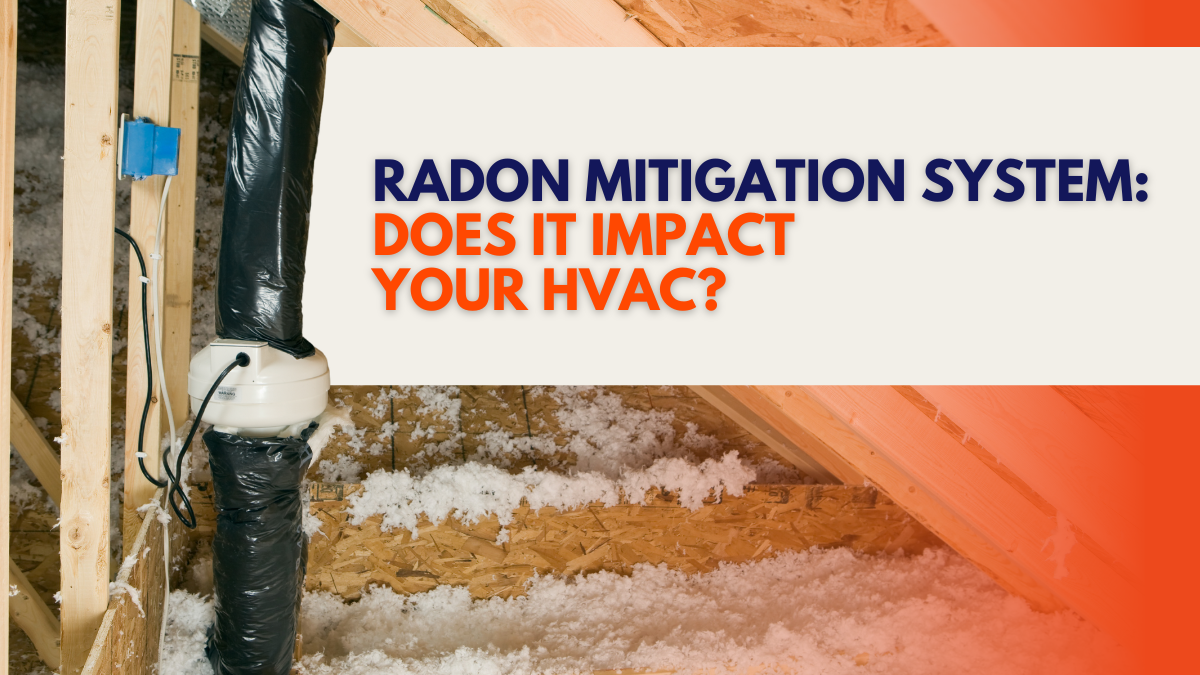
If you’ve recently installed a radon mitigation system — or you’re considering one — you may be wondering how it affects the rest of your home.
One question we hear from Iowa homeowners is:
“Will a radon system impact my HVAC system?”
The short answer is:
Yes, but usually not in a bad way.
A properly installed radon mitigation system can affect airflow, air pressure, and how your HVAC system operates. In most cases, those effects are minor and completely manageable.
Let’s look at how radon systems work and what they mean for your home’s heating and cooling system.
Does a Radon System Affect Your HVAC System?
Yes.
A radon mitigation system can affect your HVAC system by:
slightly changing air pressure inside the home
influencing airflow patterns
increasing the amount of outside air entering the house
potentially affecting energy efficiency
However, a properly designed radon mitigation system should not negatively impact your HVAC system’s performance.
In fact, many Iowa homeowners successfully operate both systems together for years without issues.
Why Radon Is Such a Big Concern in Iowa
Iowa has some of the highest radon levels in the United States.
Radon is a naturally occurring radioactive gas that forms in soil and rock.
It enters homes through:
foundation cracks
sump pits
floor joints
utility penetrations
Because you can’t see or smell radon, testing is the only way to know whether it’s present.
That’s why many Iowa homeowners install radon mitigation systems after purchasing a home or receiving elevated test results.
How a Radon Mitigation System Works
Most radon systems use a process called sub-slab depressurization.
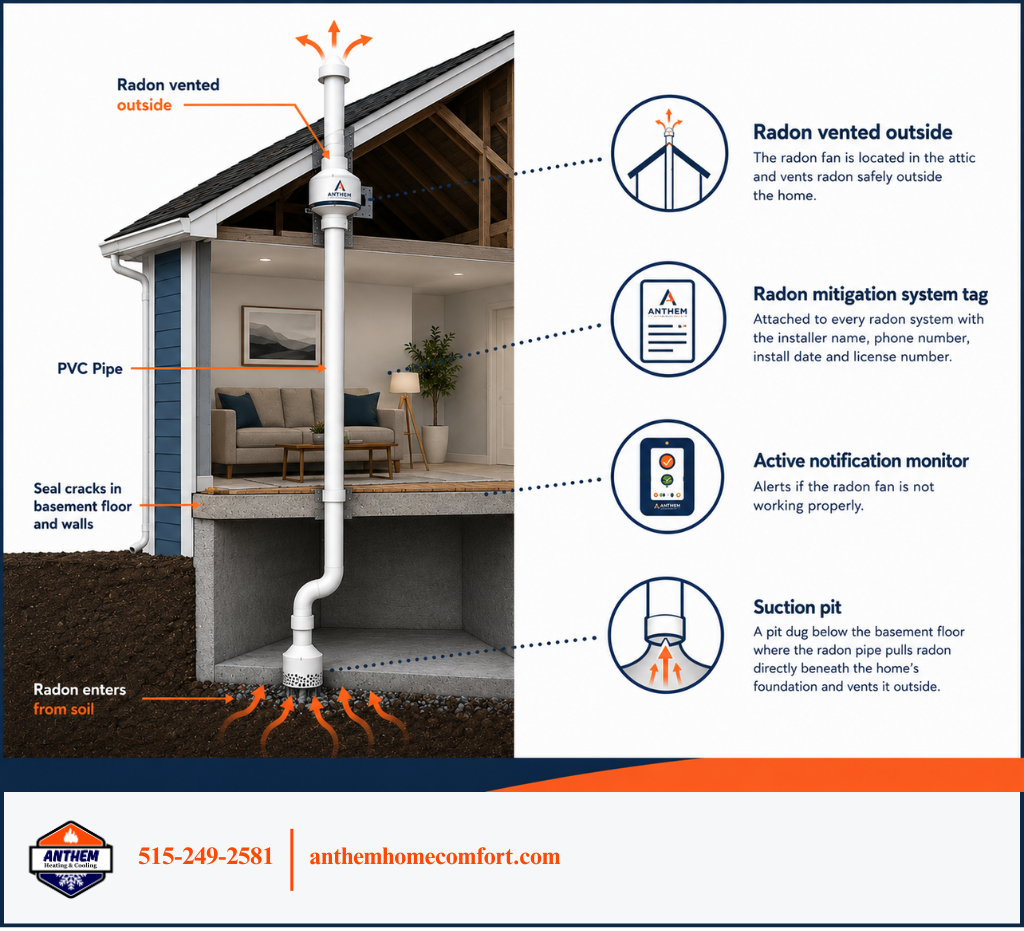
Here’s what happens:
A pipe is installed beneath the foundation.
A specialized fan continuously pulls air from beneath the home.
The radon gas is vented safely above the roofline.
The goal is simple:
Create lower pressure beneath the foundation than inside the house.
This helps prevent radon from entering living spaces.
How This Can Affect Your HVAC System
The impact is usually indirect.
Your furnace and air conditioner aren’t connected to the radon system.
However, both systems affect the air inside your home.
1. Changes in Air Pressure
Every home operates as a pressure system.
Your HVAC equipment moves air throughout the home.
Your radon system removes air from beneath the foundation.
When a radon fan runs continuously, it can slightly change pressure relationships within the house.
In most homes, the effect is small.
But in very tight homes, pressure changes can influence how air enters and exits the structure.
2. Increased Air Infiltration
As the radon system creates negative pressure beneath the slab, some outside air may enter the home through tiny openings.
That means your HVAC system may need to condition slightly more incoming air.
During Iowa winters, that air must be heated.
During summer, it must be cooled and dehumidified.
The impact is usually modest, but it can affect overall energy usage.
3. Energy Efficiency Considerations
Many homeowners wonder whether a radon system increases heating and cooling costs.
The answer is:
Sometimes—but usually only slightly.
A properly installed mitigation system is designed to remove radon while minimizing unnecessary air loss.
If the system creates excessive pressure imbalances, energy costs may increase.
This is why proper installation matters.
4. Indoor Air Quality Benefits
Here’s the good news.
A radon system improves one of the most important aspects of indoor air quality: reducing radon exposure.
Many homeowners pair radon mitigation with other indoor air quality upgrades such as:
whole-home air purifiers
upgraded filtration
humidity control systems
ventilation improvements
Together, these systems can create a healthier indoor environment.
Can a Radon System Cause HVAC Problems?
In most cases, no.
A properly installed radon mitigation system should not:
damage your furnace
damage your air conditioner
reduce equipment lifespan
interfere with thermostat operation
Problems usually occur only when:
the system is poorly designed
the home has unusual pressure issues
existing HVAC problems already exist
If you notice comfort issues after installing a radon system, it’s worth having both systems evaluated.
Signs Pressure Issues May Be Affecting Your Home
Although uncommon, pressure imbalances can sometimes cause symptoms such as:
drafts near doors and windows
uneven temperatures
higher energy bills
excessive dryness during winter
humidity problems during summer
These issues don’t necessarily mean the radon system is causing the problem.
But they may indicate that the home’s overall airflow and pressure should be evaluated.
Should Your HVAC System Be Adjusted After Installing a Radon System?
Usually not.
Most homes require no HVAC modifications after radon mitigation is installed.
However, some homeowners benefit from:
ductwork evaluation
airflow balancing
upgraded filtration
humidity control improvements
ventilation assessments
These services help ensure all systems work together efficiently.
What Iowa Homeowners Should Do
If you have a radon mitigation system:
Test Your Radon Levels Regularly
The EPA recommends periodic testing to confirm the system is working properly.
Replace HVAC Filters Regularly
Clean filters help maintain proper airflow throughout the home.
Schedule Routine HVAC Maintenance
Regular HVAC maintenance helps ensure your heating and cooling system operates efficiently regardless of pressure changes.
Learn more about how often you should service your HVAC system.
Monitor Energy Bills
Unexpected increases may indicate airflow or efficiency issues that should be investigated.
Frequently Asked Questions
The Bottom Line
A radon mitigation system and your HVAC system serve different purposes, but they both affect the air inside your home.
For most Iowa homeowners, a properly installed radon system has little impact on heating and cooling performance.
However, because both systems influence airflow and pressure, it’s important to ensure they are operating correctly.
If you’ve noticed changes in comfort, airflow, humidity, or energy bills after installing a radon mitigation system, Anthem Heating & Cooling can help evaluate your home’s HVAC performance.
Schedule an HVAC Evaluation

Anthem Heating & Cooling proudly serves homeowners across Central Iowa with honest recommendations, expert service, and practical solutions.
Request service today to schedule an HVAC evaluation and ensure your home is operating as efficiently and comfortably as possible.