
- November 10, 2026
- admin
- 0
A furnace that’s run quietly for years starts banging, squealing, or rattling, and it’s hard to tell whether you’re hearing a nuisance or a warning. The sound, and the moment you hear it, can help narrow down the possible causes.
Soft clicks, a low hum, a quiet whoosh when the burners light, and light ticking in the ducts are normal furnace sounds. A loud boom when the burners light, metal grinding, or any noise that comes with a burning smell isn’t normal. Any other new or louder noise is worth a service call, because the sound alone can’t tell you the furnace is safe to keep running.
Leave the house first if:
- You smell rotten eggs or sulfur. Don’t touch light switches or the thermostat. Call 911 and your gas utility from outside.
- A carbon monoxide alarm sounds. Get everyone outside and call 911 from there.
Turn the furnace off at the thermostat and call for service if you hear:
- A loud boom or bang right as the burners light
- Grinding or scraping metal from inside the cabinet
- Any new noise along with a burning, electrical, or hot plastic smell
- A motor that hums loudly but doesn’t seem to start
- Rumbling that keeps going after the burners shut off
What Does Your Furnace Sound Like? Start Here.
Find the sound, and when you hear it, in the first column. The last column says when to call.
| What You Notice | Possible Cause | What You Can Check | When to Call Anthem |
|---|---|---|---|
| Loud boom or bang right as the burners light | Often delayed ignition: gas builds up for a moment before it lights, often from dirty burners or a weak igniter | Nothing to check yourself. Turn the furnace off at the thermostat and leave it off | Call Anthem before running it again |
| Popping or ticking in the ducts as the heat starts or stops | Metal ductwork expanding as it warms and shrinking as it cools | Make sure the supply registers are open and nothing is blocking the returns | Call if it gets louder or turns into a bang |
| High-pitched squeal or screech while the air is moving | A worn blower belt on older furnaces, or worn bearings in the blower motor or the small inducer motor | Note whether it starts with the burners or a minute later with the blower | Call for service soon |
| Grinding or scraping metal | Motor bearings that are failing, or a blower wheel rubbing against its housing | Turn the furnace off at the thermostat | Call Anthem before running it again |
| Rattling or vibration from the cabinet | A loose access panel, screw, or duct connection, or a loose part on a motor or the blower | With the furnace off, check that the front panel is latched and the filter is seated in its slot. Don't open the burner area | Call if it rattles with the panel secure |
| Whistling at the furnace or at the registers | Restricted airflow: a clogged or very restrictive filter, a gap around the filter, or closed or blocked registers | With the furnace off, check the filter. Open any registers that are closed or covered | Call if it whistles with a clean filter |
| Clicking over and over, with no heat | An ignition or control problem, such as an igniter that isn't lighting the burners or a flame sensor a technician needs to clean | Make sure the thermostat is set to heat and the furnace power switch is on | Call if there's still no heat |
| Loud hum or buzz | A failing capacitor, relay, or transformer, or a motor that's straining | If a motor hums but doesn't seem to start, turn the furnace off | Call if it's new or getting louder |
| Rumbling that continues after the burners shut off | Burners that aren't burning cleanly, or fuel still burning after the cycle ends | Turn the furnace off and test your carbon monoxide alarms | Call Anthem before running it again |
Not sure which sound it is? If none of the leave-now or turn-it-off signs apply, record a short clip on your phone during a normal cycle for the technician. Never restart a furnace just to record a boom, grinding, or a burning smell.
Sounds a working furnace makes
A typical modern gas furnace makes its sounds in a set order. Knowing that order helps you describe where in the cycle a strange sound shows up.
When the thermostat calls for heat, you’ll hear a click. A small motor called the inducer starts next with a steady hum.
The inducer clears exhaust out of the furnace before the burners light. Then the igniter glows or sparks, the burners light with a soft whoosh, and about a minute later the main blower starts pushing warm air through the house. After the thermostat is satisfied, the burners go out and the blower keeps running for a minute or two to pull the last of the heat out.
Light ticking in the ducts as they warm up and cool down is normal too. A sound that’s new this season, or louder than last winter, is worth paying attention to instead of waiting out.
Banging and booming
A bang can come from very different causes, and when it happens helps tell them apart.
A boom right when the burners light
A boom at the moment of ignition often points to delayed ignition. Gas flows for a moment before it lights, then catches all at once with a small burst.
Dirty burners, a weak igniter, or a gas pressure problem can cause it. Each burst puts stress on the heat exchanger, the metal part that keeps combustion gases separate from the air you breathe. Over time that stress can lead to cracks.
Turn the furnace off at the thermostat and leave it off until a technician has looked at it. Don’t restart it to listen again or to record it.
Popping in the ducts when the heat starts or stops
Sheet metal ducts grow a little as warm air fills them and shrink as they cool. That movement can make a tick or a pop, often in the same spot every cycle.
Light popping is usually harmless. It tends to get louder when air can’t move freely, such as with a clogged filter or several registers closed. Our post on whether you should close vents in unused rooms explains why closed registers raise the pressure in the ducts. A loud bang from the ducts, or popping that’s getting worse, is worth a service call.
Squealing and screeching
Older furnaces often use a rubber belt to drive the blower, and a worn or loose belt can squeal. Most newer furnaces drive the blower straight off the motor, so a squeal on those more often points to motor bearings wearing out. If the squeal starts with the burners, before the main blower comes on, the small inducer motor is a possible source.
A squeal means a part is wearing out, so call for service soon rather than waiting for it to quit. A blower that stops leaves you with no heat, often on a cold night when the furnace is running the most. Our guide on what to do if your furnace breaks covers the safe checks if that happens. Leave belts, bearings, and lubrication to the technician.
Rattling and vibration
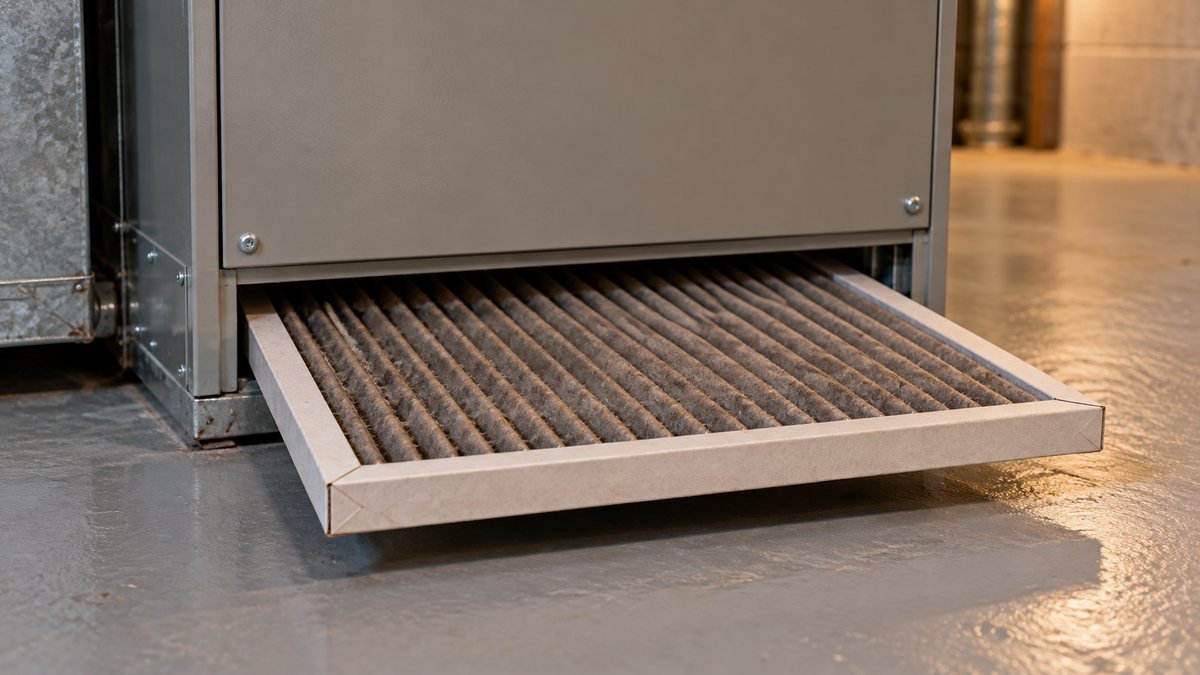
Some rattles come from parts you can see. With the furnace off, check that the front panel is latched and the filter is seated in its slot, following the instructions on your furnace. A loose panel or filter can rattle, but tightening it doesn’t rule out a cause inside the cabinet.
If the rattle continues, it can come from a loose blower wheel, a motor mount, or a part in the inducer. A technician will also check the heat exchanger. Don’t open the burner compartment to look. Call for service, and test your carbon monoxide alarms in the meantime.
Whistling
A whistle often means air is squeezing through a space that’s too small. With the furnace off, check the filter first. A clogged filter, a very restrictive one, or a gap around the filter frame can all whistle. Our guide to choosing a furnace filter by MERV rating explains why the highest-rated filter isn’t always the right one for a home furnace.
If the whistle is at the registers instead of the furnace, walk through the house. Closed registers, a couch pushed against a return grille, or a rug over a floor vent can all force air through fewer openings. Clear them and listen during the next cycle.
Clicking
One or two clicks at the start and end of a cycle are normal. Repeated clicking without heat can point to an ignition or control problem. The igniter may not be lighting the burners, or the burners may light and shut off a few seconds later, which a dirty flame sensor can cause. Cleaning or replacing a flame sensor is a job for the technician.
After several failed tries, many furnaces lock themselves out for a while. Our post on why a furnace is blowing cold air covers the ignition problems in more detail. If the clicking is at the thermostat on the wall and the furnace never starts, see our guide on what to check when your thermostat isn’t working.
Humming and buzzing
A soft hum from the motors is normal. A loud hum or an electrical buzz that’s new can point to a failing part, such as a capacitor that helps a motor start, a relay, or the transformer. If a motor hums but doesn’t seem to start, turn the furnace off, because a stalled motor can overheat. Call for service if the sound is new or getting louder.
How to describe the noise to a technician
A noise that’s loud at 2 a.m. is often quiet when the technician arrives. A few notes help find it faster:
- When it happens: as the burners light, when the blower starts, while it runs, or after it shuts off
- Where it seems to come from: the furnace, the ducts, or one register
- Whether it’s new, and whether it’s getting louder
- Any smell that comes with it
- A short phone recording, only if none of the leave-now or turn-it-off signs apply. Never restart a furnace just to record a boom, grinding, or a burning smell.
Frequently Asked Questions
Why does my furnace bang when it turns on?
A loud bang at the moment the burners light can be delayed ignition, where gas builds up briefly before it lights. Turn the furnace off and have it checked before you run it again.
Is it normal for a furnace to make noise?
Some noise is normal: a click at the start and end of a cycle, a low motor hum, a soft whoosh at ignition, and light ticking in the ducts. A new or louder sound is worth having checked.
Why is my furnace squealing?
A worn blower belt on an older furnace, or wearing motor bearings on a newer one, are common causes. Call for service soon so the part can be replaced before it fails.
Why does my furnace rattle?
A loose panel, filter, or duct connection can rattle, and so can loose parts inside the cabinet. With the furnace off, check that the panel and filter are seated. If the rattle continues, have a technician look inside.
Is a noisy furnace dangerous?
Some noises are. A boom at ignition, grinding metal, a motor that hums but won’t start, rumbling after shutoff, or any noise with a burning smell means turn the furnace off and call. A gas smell or a carbon monoxide alarm means leave the house first and call 911 from outside.
Can a dirty filter make a furnace noisy?
Yes. A clogged filter restricts airflow, which can cause whistling and louder air at the registers. With the furnace off, replace the filter first when you hear an airflow noise.
When to call
Leave the house and call 911 for a gas smell or a carbon monoxide alarm. Turn the furnace off and call before running it again for a boom at startup, grinding, a stalled motor, rumbling after shutoff, or a noise with a burning smell. For any other new or louder sound, such as squealing, rattling, buzzing, or whistling with a clean filter, call for service soon.
Many noises start as small wear that a yearly tune-up can catch, such as a dry bearing or a dirty burner. Our guide on how to prevent furnace failure covers the habits that help. If your furnace is older and the noises keep coming back, read how to tell if your furnace needs repair or replacement. If you also have a heat pump, a whoosh and a cloud of steam from the outdoor unit in cold weather is its normal defrost cycle; how cold is too cold for a heat pump explains it.
Anthem handles furnace repair and installation across Central Iowa from Bondurant and Grinnell. If something sounds wrong, request service with Anthem Heating & Cooling.