
- September 29, 2026
- admin
- 0
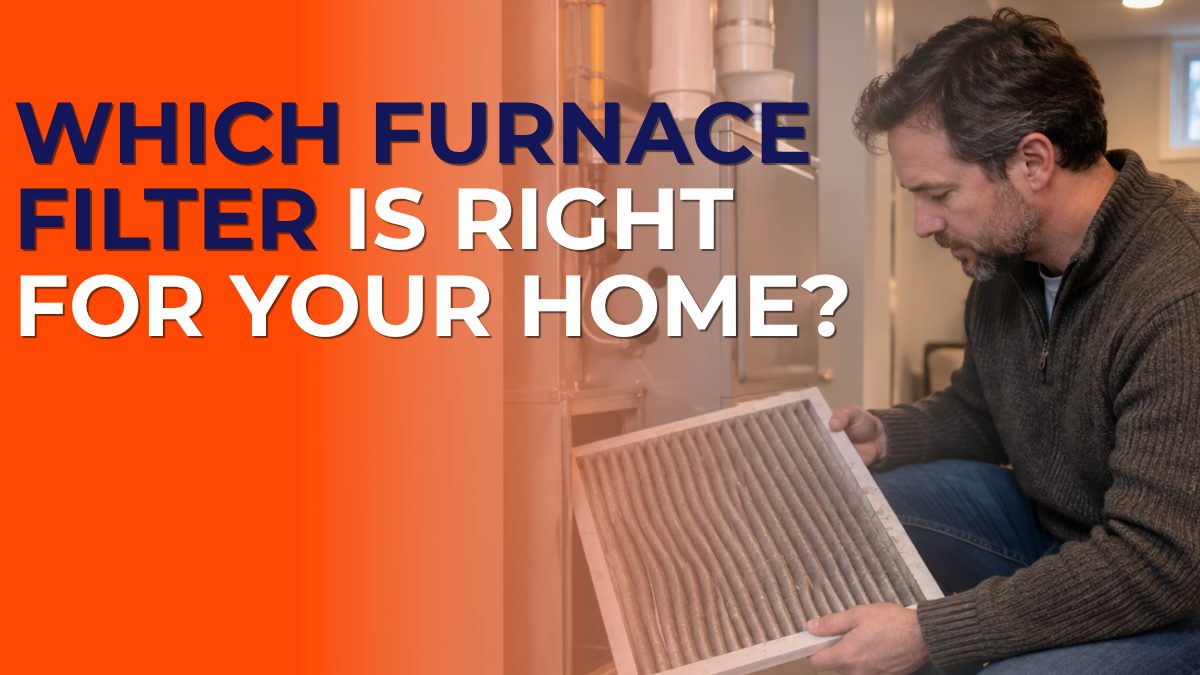
A furnace filter is the cheapest part of your heating system, and it’s easy to buy one without thinking about the furnace it’s going into. The package makes it look simple: a bigger MERV number must mean a better filter. For your furnace, it isn’t quite that simple.
For many Central Iowa homes, MERV 8 to 13 is the range worth looking at. The right number depends on the furnace, the blower, the ductwork, the size of the filter slot, and how much resistance that particular filter creates. Higher isn’t automatically better. Put a filter in that creates more resistance than the blower and ductwork can handle, and airflow drops. That can happen with some high-MERV filters, especially in systems with a one-inch filter slot or static pressure that’s already high.
What a MERV rating measures
MERV stands for Minimum Efficiency Reporting Value. It’s a 1 to 16 scale on the filters sold for homes, and a higher number means the filter captures smaller particles.
MERV only tells you how well the filter captures particles. It doesn’t tell you whether that particular filter is a good match for your furnace and ductwork. MERV isn’t a pressure-drop rating. Two filters with the same MERV number can make the blower work very differently, especially when you compare a one-inch filter with a deeper media filter.
Which MERV Rating Belongs in Your Furnace?
MERV tells you what a filter catches. Airflow decides whether your furnace can use it.
| MERV Range | What It Catches | Where You See It | What It Does to a Home Furnace |
|---|---|---|---|
| MERV 1 to 4 | Lint, carpet fibers, and the dust you can see | Thin spun fiberglass panels, the cheapest option on the shelf | Basic equipment protection, little real filtration |
| MERV 5 to 8 | Household dust, mold spores, and pollen | Standard pleated one-inch filters | Usually easy for a home system to handle |
| MERV 9 to 12 | Finer dust, pet dander, and smoke particles | Better pleated filters and four-inch media cabinets | Better capture, check the pressure drop |
| MERV 13 | Fine particles, including much of the smoke and fine dust that gets past lower ratings | Deeper media filters and some one-inch pleated filters | Many home systems can use it if airflow allows |
| MERV 14 to 16 | Very fine particles, down toward bacteria-sized matter | Hospitals, labs, and specialized equipment | Needs a careful look at the system first |
Not sure what yours can handle? A technician can check the pressure drop across the filter and the system's static pressure.
Request ServiceWhy a higher number can work against your furnace
Your blower has to pull every cubic foot of air in the house through that filter. Every bit of resistance in the return-air path makes the blower work harder to move the amount of air the furnace needs, and the filter is part of that resistance.
HVAC technicians measure that resistance as the pressure drop across the filter and as part of the system’s total static pressure. If the restriction gets high enough, the system may not move enough air across the heat exchanger. That can make the furnace run hotter than intended and eventually trip the high-limit switch, which shuts the burners off before anything gets damaged.
To you, it may look like a furnace that keeps starting and stopping, or one that can’t keep the house comfortable. In January an Iowa furnace runs long cycles for days at a stretch, so this tends to show up as a comfort complaint before it shows up as a repair.
How often to change it during an Iowa winter
A furnace can rack up far more hours during a bitter January stretch than it did through weeks of mild fall weather, so a filter that looked fine at Thanksgiving can be loaded by New Year’s. Runtime decides this more than the calendar does. There isn’t one replacement schedule that fits every house, but these are useful starting points:
- One-inch filters: look at it monthly, and plan on a new one every one to three months. During a long cold stretch, lean toward the short end.
- Four or five-inch media filters that sit in a cabinet: many go six months or longer. Follow the manufacturer’s recommendation, and check it at least once during the heating season rather than assuming it will make it a full year.
- Change it sooner if you have pets that shed, you’ve had drywall or sanding work done, or your return vents sit in a finished basement that collects dust.
Write the installation date on the cardboard frame before the filter goes in. It makes it much easier to tell how long it’s been there.
Signs your furnace filter may be clogged
- Weak air out of the registers, even with the furnace clearly running.
- Rooms far from the furnace never catch up, which is one of the reasons your upstairs is freezing in winter.
- The burners quit before the thermostat is satisfied, then fire again a few minutes later.
- Whistling or unusual air noise around the filter slot, especially if it started as the filter got dirtier.
If a clean filter doesn’t fix uneven temperatures, the problem may be airflow, ductwork, insulation, or how the system is set up. Our guide to the best thermostat settings for Iowa homes covers one more piece of that puzzle.
Size and direction
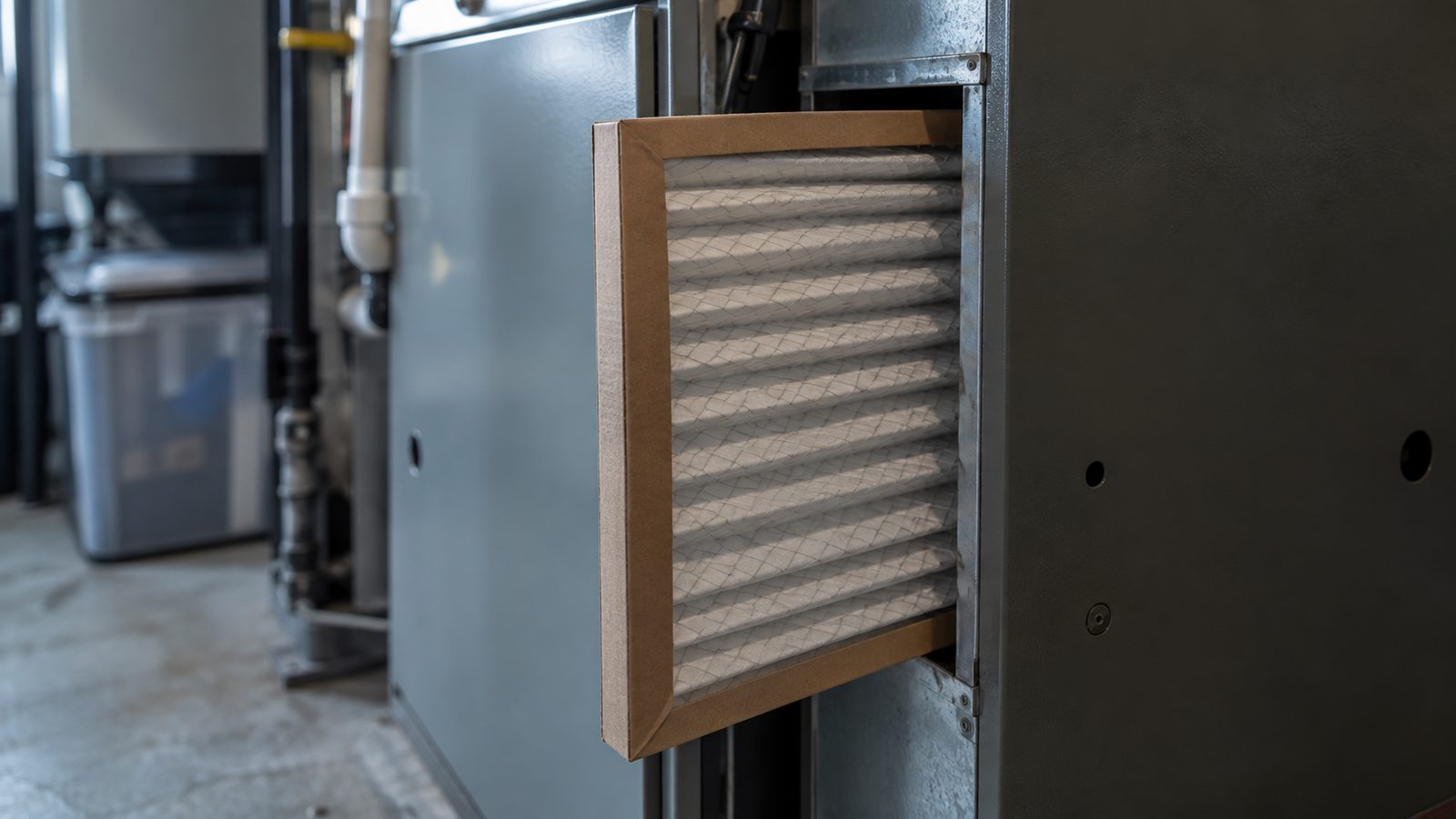
The size printed on the frame is a nominal size, not a tape-measure size. A filter marked 16x25x1 measures a little under that on purpose. Buy by the printed number and don’t try to correct it.
The arrow on the frame should point in the direction the air is moving. In the common return-air slot beside a furnace, that usually means toward the furnace and away from the room. A filter installed backward may not be properly supported against the airflow, and it can deform as it loads with dust.
A filter that rattles loose in the slot is worse than a cheaper one that fits properly. Gaps around the edge let some of the return air bypass the filter altogether.
What a filter will not fix
A furnace filter handles particles. It doesn’t control humidity, which is a separate complaint in a lot of Iowa houses by mid-January.
Static shocks and very dry skin show up when indoor humidity is low. Condensation on the inside of your windows usually means the opposite: there’s more moisture in the indoor air than the cold glass can tolerate. Both have their own fix. Start with whether a whole-home humidifier is worth it, then look at the rest of our indoor air quality solutions in Central Iowa.
A filter isn’t a substitute for service either. It’s the one piece of the system you handle yourself, and the rest belongs in a seasonal visit. Our post on getting your furnace ready for winter walks through the checks. How often to service your HVAC system covers the timing, and the Comfort-Shield maintenance plan puts it on a schedule.
Common questions about furnace filters
What MERV rating should I use in my furnace?
There is no single MERV rating that is right for every furnace. MERV 8 is a common starting point for Central Iowa homes, and MERV 11 or 13 can capture more of the fine particles if the system can handle that filter’s pressure drop. The filter and the equipment still need to be matched.
How often should I change my furnace filter in winter?
Every one to three months for a one-inch filter is a reasonable starting point, and closer to one month during a long cold stretch, because the furnace is running far more hours. A four-inch media filter in a cabinet often goes six months or longer. Follow the manufacturer’s recommendation and check it during the heating season.
Can a dirty filter shut my furnace off?
Yes. A restricted filter lets the heat exchanger run hotter than intended, and the limit switch cuts the burners to protect it. The blower keeps going, so your vents blow cool air until the furnace cools down and tries again.
Are washable furnace filters worth it?
Reusable filters have to be cleaned thoroughly and allowed to dry completely before they go back in. Their filtration varies by product, so check the MERV rating on the one you are considering rather than assuming washable and disposable filters perform the same. For many homeowners, disposable pleated filters are simply easier to maintain.
Does a thicker filter last longer?
Often. A four or five-inch pleated media filter has much more surface area than a one-inch filter, which lets it hold more dust before the pressure drop climbs. It also needs a cabinet sized for it, so that is an installation, not a swap at the hardware store.
Will a better filter help with dry air or odors?
A filter will not help with dry air, which is a humidity problem and needs a humidifier. A higher-efficiency filter can help with finer airborne particles if your system can accommodate it. Most ordinary furnace filters will not do much for gases and odors, though. Those need different equipment or ventilation.
When it’s worth a call
If you’ve replaced the filter and the furnace is still cycling off early, or the house isn’t heating evenly, the filter probably wasn’t the whole problem. At that point it’s worth having the airflow and static pressure checked along with the furnace itself.
Anthem serves Central Iowa from Bondurant and Grinnell. Schedule service with Anthem Heating & Cooling today.