

Indoor Air Quality Solutions in Central Iowa
Whole-home humidifiers, air purification, ventilation, and filtration for Central Iowa homes. We start by finding out what your air is actually doing, then fix that.

Locally Trusted

Fast Response Times

Financing Available

Licensed & Insured
Most People Notice It in January
Static shocks every time you cross the living room. Sinuses that feel raw by the second week of cold weather. A gap opening between the hardwood boards in the dining room that wasn’t there in July.
None of that’s your imagination, and none of it’s a furnace problem. It’s the air itself. A furnace running hard for four straight months pulls the humidity out of a house, and Central Iowa gives it plenty of chances.
Then the season flips. By July the same house is holding too much moisture, the basement smells like a basement, and the air conditioner is doing double duty as a dehumidifier it wasn’t designed to be.
Indoor air quality work is what sits between those two extremes.
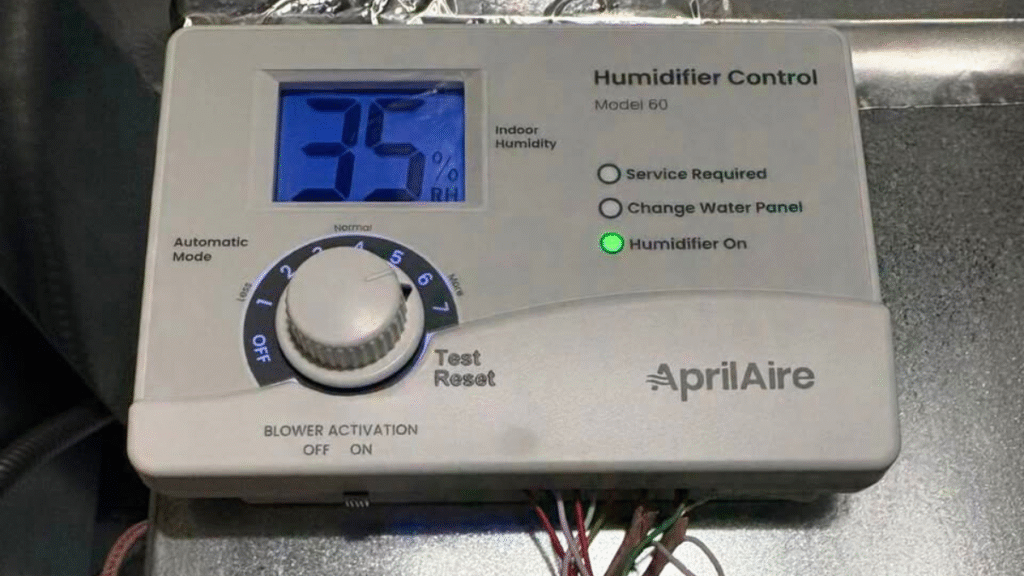
Iowa Hands Your House Two Opposite Air Problems a Year
Most air quality advice online is written for a climate that only has one problem. Iowa has two, six months apart, and equipment that solves one can make the other worse.
Winter is a moisture shortage. Cold outside air holds very little water, and once your furnace heats it, indoor humidity drops. That’s the static, the dry throat, the woodwork shrinking, and the reason the house feels colder at the same thermostat setting.
Summer is a moisture surplus. Iowa humidity finds its way into basements, closets, and anywhere air moves slowly. An air conditioner removes some of it as a side effect of cooling, but on a mild damp day the system barely runs, so it barely dries the air.
A humidifier sized for January and left running in July is a real problem. This is the part homeowners get wrong on their own, and it’s the reason the equipment gets picked after the assessment rather than before.
What Each Piece of Equipment Actually Does
Four different jobs, four different tools. Matching the tool to the complaint is most of the work.
| Equipment | The Problem It Solves | How It Works | Best For |
|---|---|---|---|
| Whole-home humidifier | Winter dryness. Static, dry sinuses, shrinking wood floors and trim, a house that feels colder than the thermostat says. | Installed into the ductwork and tied to the furnace, adding moisture to the air as it's heated. Controlled by a humidistat, not by you refilling a tank. | Any Iowa home that gets uncomfortable from December through March |
| Air purification | Airborne particles and odors moving through the house. Dust that comes back two days after you clean. | Mounted in the air handler so everything the system circulates passes through it, rather than treating one room at a time. | Homes with pets, or where dust returns faster than it should |
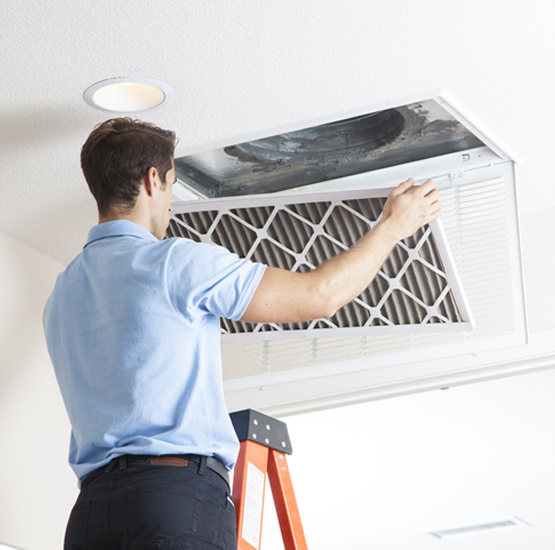
| Better filtration | A filter that isn't catching enough, or one so restrictive it's choking the system. | A media filter cabinet holds a thicker filter with more surface area, so it catches more without strangling airflow the way a packed one-inch filter does. | Anyone changing a one-inch filter every month and still seeing dust |
| Ventilation | Stale air in a tightly sealed house. Cooking and shower moisture that lingers, air that feels heavy by evening. | Brings measured fresh air in and pushes stale air out on purpose, instead of relying on the house leaking. | Newer, tighter builds, and any home after major insulation work |
Not sure which one you need? That's the normal starting point. The assessment comes first and the equipment follows from it.
Request Service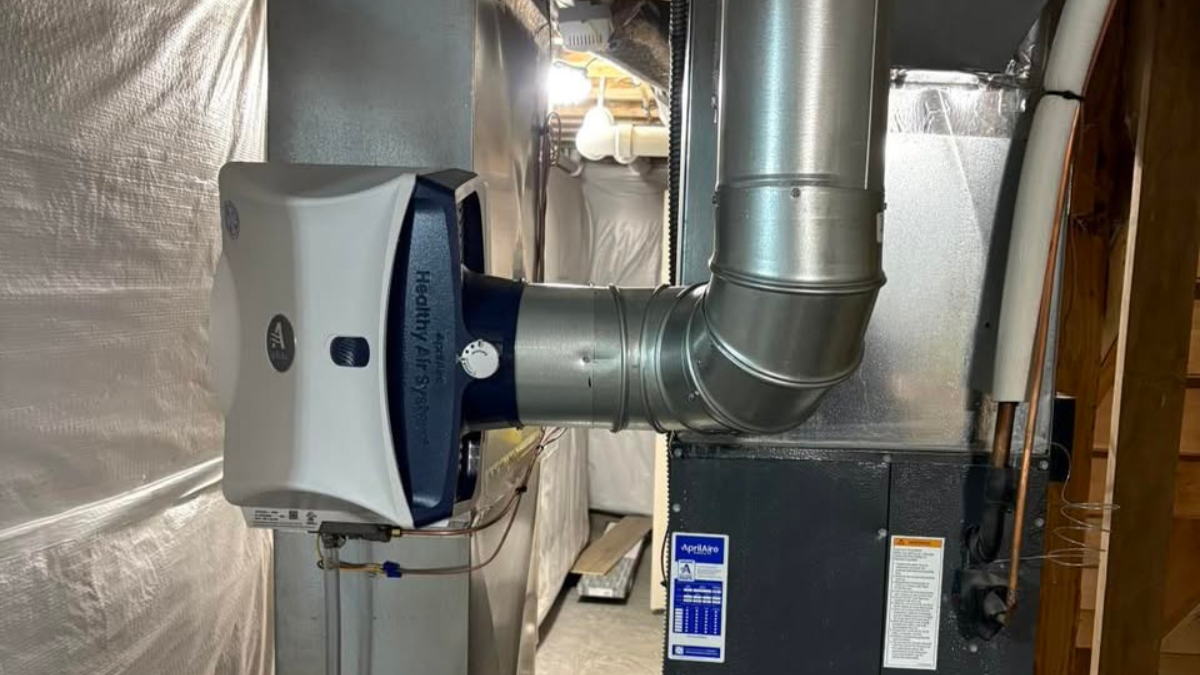
New Houses and Old Houses Have Opposite Air Problems
This is where a lot of generic advice falls apart, and it matters across a service area that runs from new construction in Bondurant and Ankeny to century-old homes in Des Moines and Grinnell.
A tightly built newer home holds its conditioned air well, which is what you want for the energy bill. The tradeoff is that it also holds everything else: cooking smells, shower moisture, whatever the carpet and the new cabinetry are giving off. Those houses usually need ventilation and filtration more than they’ll ever need humidity added.
An older home leaks. It’s exchanging air with the outside constantly through gaps you can’t see, so stale air is rarely the complaint. Winter dryness is much worse in those houses, because every leak is pulling in cold, dry outside air. Humidification is usually the first move, and it works better once the obvious air sealing’s been done.
Same city, same weather, opposite prescriptions. Putting a ventilator in a drafty 1920s house is money spent on a problem it doesn’t have.
Radon is worth a separate conversation. It comes up often in Iowa homes, and homeowners frequently ask whether a mitigation system and their HVAC system interfere with each other. They interact more than most people expect. We wrote about it here: does a radon mitigation system affect your HVAC system.
How We Approach It
Step 1: Reach Out
Call or schedule online and tell us what’s going on.
Step 2: We Inspect the System
We evaluate the issue, explain what we’re seeing, and answer your questions clearly.
Step 3: Get a Recommendation
We walk you through the best next step for your home, system, and budget.
Step 4: Restore Your Comfort
Our team completes the repair, replacement, or service so your home feels right again.
On air quality specifically, step two carries more weight than it does on a repair call. We’re looking at the existing filtration, the ductwork, how the house is holding humidity, and whether the system has the airflow to support what you’re considering. Sometimes the honest answer is that a filter change and a duct fix solve it, and there’s no new equipment needed. We’d rather tell you that.
Air quality equipment needs upkeep too, or it stops doing its job. Humidifier pads and media filters get changed on a schedule, and both are covered in the twice-yearly visits under the Comfort-Shield maintenance plan. Our guide on how often to service your HVAC system covers the rest of the schedule.
Why Homeowners in Central Iowa Choose Anthem Heating & Cooling
Homeowners don’t just want HVAC service. They want to know they’re calling the right team.
Clear communication
We explain what’s happening in plain language
Honest recommendations
We help you make the right decision, not the most expensive one
Reliable workmanship
We focus on doing the job right so your comfort lasts
A better customer experience
We respect your time, your home, and your trust
What Homeowners Usually Describe When They Call About Air Quality
The same handful of complaints come up over and over.
- Dust that reappears within a day or two of cleaning
- Static shocks all winter, and doors and drawers that stick in one season and not the other
- One room that always smells different from the rest of the house
- Gaps opening in hardwood floors or trim over the winter, then closing again by summer
- Condensation on the inside of windows on cold mornings, which is the opposite problem and means there’s too much moisture, not too little
- Air that feels heavy or stale by the end of the day in a newer home
- A basement that smells like a basement no matter how often it’s cleaned
Several of those have more than one cause, and a few of them are airflow problems wearing an air quality costume. A room that stays stuffy may be short on supply air rather than short on filtration, which is the same underlying issue behind rooms upstairs running colder or hotter than the rest of the house. Worth checking before anything gets installed.
Trusted by Homeowners in and Around Central Iowa

Serving Central Iowa Homeowners
Anthem Heating & Cooling provides indoor air quality solutions throughout Central Iowa, including Ankeny, Bondurant, Altoona, Des Moines, Grinnell, Pleasant Hill, Johnston, Polk City, and all across Central Iowa. View our service areas to see if your location is covered.

What indoor humidity level should an Iowa home hold in winter?
Somewhere in the thirty to forty percent range suits most homes. Push much higher in deep cold and you’ll get condensation on the windows, which causes its own damage. The right number depends on how well your windows and walls are insulated, which is why a humidistat matters more than a fixed setting.
Will a whole-home humidifier work better than the portable one I already have?
For a whole house, yes. A portable unit treats the room it’s in and needs refilling. A whole-home humidifier ties into the ductwork, uses your plumbing, and holds the level across every room the furnace serves. We worked through the cost side of that decision in is a whole-home humidifier worth it.
Does an air purifier help with pet dander and household odors?
A system installed in the air handler treats everything the furnace and air conditioner circulate, which is the entire house rather than one room. It works alongside good filtration rather than replacing it.
Why is there condensation on the inside of my windows?
That’s too much indoor humidity meeting a cold surface. It usually means the humidifier’s been set too high for the outdoor temperature, or the house has moisture coming in from somewhere else. Worth addressing, because persistent window condensation damages sills and frames.
How often do air quality components need service?
Humidifier pads and media filters are typically changed once or twice a year depending on the equipment and the household. Both are handled during the twice-yearly Comfort-Shield visits.
Can better filtration hurt my system?
It can, if the filter’s too restrictive for the equipment. A dense filter in a slot built for a thin one starves the blower, which drives up energy use and can trip safety limits. The fix is usually a media filter cabinet with more surface area rather than a denser one-inch filter.
Do you install air quality equipment on ductless systems?
Options are different without ductwork, since there’s no central air handler to install into. Ductless mini split systems carry their own filtration, and we can talk through what fits a home that runs on them.
Wondering What Your Air Is Actually Doing?
If your house gets uncomfortable at the same time every year, there’s usually a reason, and it’s usually fixable. We’ll look at what you’ve got and tell you honestly whether new equipment is the answer or not.