
- November 19, 2025
- admin
- 0
When your furnace or AC stops working, it’s stressful. The house gets cold. The kids get uncomfortable. And all you want is to know one thing:
Do I repair it… or replace it?
Most Central Iowa homeowners face this choice at least once. But the truth is, the repair-vs-replace decision is rarely simple. You’ll find a wide range of opinions online. People in Facebook groups will debate it all day. Even well-meaning friends will tell you “repair it!” or “replace it!” with confidence.
So how do you know what’s right for your home?
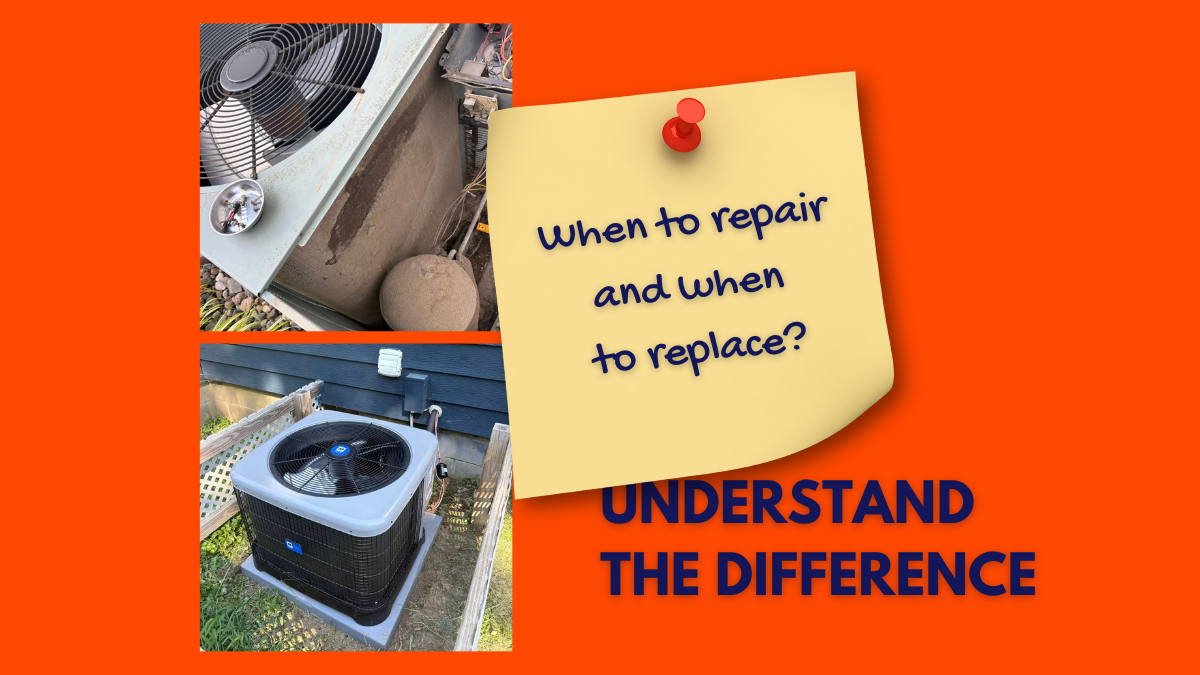
This guide breaks everything down in a clear, simple way. You’ll learn the real difference between HVAC repair and replacement, the signs that matter most, and when a new system might save you money. Think of it like a map. One that shows you the path forward when you’re stuck between two expensive choices.
Let’s get into it.
What Does “HVAC Repair” Actually Mean?
Repair means fixing a part or problem so your system can keep running. It’s usually the fastest and least expensive option. Most repairs focus on one component, not the whole unit.
Common HVAC repairs include:
Replacing a capacitor
Fixing a blower motor
Repairing a cracked ignitor
Cleaning a clogged drain line
Refilling refrigerant (if the leak is fixed)
Replacing a thermostat
A repair usually makes the system work again for now. But whether it keeps working long-term depends on the age, health, and size of the furnace or AC.
When a repair makes sense:
The fix is small
The unit is under 10–12 years old
The repair cost is low
Your energy bills are normal
This isn’t part of a pattern of breakdowns
If your system is still young enough to have life left, repair can be the smart move.
Learn more about common fixes:
Visit Anthem’s guide on heating repair vs replacement.
What Does “HVAC Replacement” Actually Mean?
Replacement means taking out your old furnace or AC and installing a new one. It’s a bigger investment upfront, but it solves problems repairs cannot.
Replacement includes:
Removing your old system
Installing a brand-new unit
Ensuring proper airflow and venting
Connecting gas, electrical, or refrigerant lines
Testing safety and performance
A new HVAC system brings updated technology, higher efficiency, quieter operation, and stronger comfort control.
Replacement makes sense when:
The unit is at or near the end of its lifespan
Repairs are adding up
Energy bills keep rising
Parts are outdated or unavailable
The system has major structural issues
Safety concerns exist (like cracked heat exchangers)
New systems today use far less energy. Many Central Iowa homeowners save hundreds of dollars a year after upgrading. And because furnace and AC lifespans is limited, there’s a point where repairs stop making financial sense.
See your options:
Check out Anthem’s full lineup of heating installation services.
How Long Does an HVAC System Last?
The average lifespan depends on the type of system:
Gas furnace: 15–20 years
Air conditioner: 12–15 years
Heat pump: 10–15 years
Ductless mini split: 12–20 years
These are averages from ENERGY STAR, ASHRAE, and major manufacturers.
Your system may last longer with proper maintenance. But once your furnace or AC passes the 15-year mark, repair becomes less cost-effective.
Why?
Because older systems lose efficiency every year. They also face more wear and tear. That means more repairs… and more expensive repairs.
A good rule of thumb:
If your system is past 15 years and has major issues, replacement usually saves more money long-term.
What Are the Signs You Should Choose Repair?
Sometimes a repair is quick, affordable, and all you need. Here’s when repair is usually the right call:
Your system is younger than 10–12 years
Most HVAC systems still have plenty of life left at this age.
The repair cost is low
Minor fixes, like ignitors, capacitors, or clogged lines, are normal over the life of a system.
The issue is isolated
A single part failure does not always mean the whole system is going bad.
Your energy bills look normal
Unexpected spikes in energy use are a sign the system is struggling. Normal bills = normal performance.
Your home is still comfortable
If airflow, heating, and cooling are consistent, your system is still doing its job.
Repair helps you save money in scenarios like these.
If you’re unsure, an Anthem technician can diagnose the issue during a service visit and explain your options clearly.
What Are the Signs You Should Choose Replacement?
There are moments when repair just delays the inevitable. Here’s when replacement becomes the smarter choice:
Your system is older than 15 years
Most units are nearing the end of their lifespan at this point.
You’re dealing with repeat breakdowns
One repair? Fine.
Two or three repairs in a year? Something bigger is going on.
Your energy bills are rising
Older HVAC systems need more energy to do the same job.
Your home has uneven temperatures
Struggling systems can’t push enough warm or cool air throughout the home.
You notice loud noises or strange smells
Grinding, banging, burning odors, or mustiness can signal serious internal problems.
The quote for repair is more than half the cost of replacement
This is a key rule shared across ENERGY STAR, Angi, and industry experts.
Your system uses R-22 refrigerant (older ACs)
R-22 was phased out by the EPA. If an R-22 system leaks, replacement is your only cost-effective option.
Replacement may feel like a big step, but it often saves money and stress in the long run.
The $5,000 Rule — The Simplest Way to Decide
Many HVAC pros use the $5,000 rule:
Repair cost × System age = Decision
If the number is under $5,000, repair is usually cost-effective.
If the number is over $5,000, replacement usually makes more sense.
For example:
$450 repair × 14-year-old furnace = $6,300 → Replacement
$300 repair × 7-year-old AC = $2,100 → Repair
It’s not perfect, but it’s a helpful quick check when you’re unsure.
The Hidden Costs People Forget to Consider
Most homeowners compare repair and replacement based only on price. But there are hidden costs that matter just as much.
Let’s break them down.
Hidden Cost #1: Energy Efficiency
Older systems burn more fuel or electricity.
A new high-efficiency furnace or AC can reduce energy use by 20–40% according to ENERGY STAR.
That adds up fast in Central Iowa, especially during long winters.
Hidden Cost #2: Safety Risks
A cracked heat exchanger can leak carbon monoxide. A failing AC compressor can overheat wiring.
Repairs may fix the symptom—but not the underlying risk.
Hidden Cost #3: Comfort Problems
Older systems often struggle to keep up. You’ll feel:
Cold spots
Hot spots
Slow heating
Weak airflow
Comfort is part of the equation too.
Hidden Cost #4: Availability of Parts
Some older furnaces and ACs use parts that manufacturers no longer make. If the part is discontinued, replacement is the only option.
Hidden Cost #5: Future Repairs
If your system is breaking down now, there’s a good chance it has more failures around the corner.
Many Central Iowa homeowners replace their system after the third repair in a 12–18 month period.
When Repair Is Cheaper Short-Term but Costlier Long-Term
This is where many homeowners get stuck. A repair today might cost $300. A new furnace might cost $4,000. So repair feels like the easy choice.
But here’s the trap:
A repair can keep the unit running…
…but not solve underlying problems caused by age, wear, or sizing.
Many homeowners who choose repair end up paying:
$300 now
$600 next winter
$1,200 the year after
Higher energy bills the entire time
Total spent: more than the cost of a new system.
Replacement is a bigger decision—but for many families, it stops the cycle.
When Replacement Helps You Save Money Long-Term
Here’s what you get with a new system:
Higher energy efficiency
Lower monthly bills from day one.
Full manufacturer warranties
Many systems include 10-year part warranties and labor warranties depending on the brand.
Stronger airflow and comfort
Modern systems are designed for even heating and cooling.
Quieter operation
Technology has improved drastically.
Indoor air quality upgrades
Many newer units integrate with whole-home filtration, humidity control, and smart thermostats.
Peace of mind
No more wondering if the heat will fail on a snowy Friday night.
Replacement costs more upfront, but these benefits often pay you back quickly.
What About Repairing vs. Replacing Parts Like Heat Exchangers or Compressors?
Some repairs cost so much that they might as well be replacements.
Furnace Heat Exchanger
This is the heart of the furnace. If it cracks, replacement is usually required for safety reasons.
Heat exchanger replacement often costs $1,500–$3,000, which is close to the cost of a new furnace.
AC Compressor
This is the most expensive AC part. When it fails, replacement is often recommended.
Compressors usually cost $1,200–$2,500 to replace.
If your system is older than 10–12 years, replacing these major parts doesn’t make financial sense.
How Energy Efficiency Ratings Affect Your Decision
Your furnace has an AFUE rating. Older models have 70–80% AFUE. Newer systems often have 95–98% AFUE.
That means:
Old furnace: 20–30% of heat is wasted
New furnace: Only 2–5% is wasted
AC units also have SEER2 ratings. Older ACs are often 10–14 SEER. New units start around 15–18 SEER2.
The higher the rating, the less energy you use. And in a high-heating state like Iowa, efficiency matters.
What to Do If Your HVAC System Breaks Down Suddenly
Breakdowns rarely happen at convenient times. They usually show up on the hottest day of summer or the coldest night of winter.
Before you panic, check the basics:
Check the thermostat
Make sure it’s on, set correctly, and has fresh batteries.
Check the filter
A clogged filter can shut the whole system down.
Check breakers
Sometimes the fix is as simple as resetting a tripped breaker.
Check airflow
Closed vents can cause overheating or freezing.
If you’ve checked everything and it still won’t run, it’s time to call Anthem for a diagnosis.
Learn what to do during a breakdown here:
What to Do If Your Furnace Breaks in the Winter
How Anthem Helps You Decide Repair vs Replacement
Anthem technicians don’t push you toward one option. Instead, they walk through:
System age
Repair history
Cost of repair
Cost of replacement
Energy savings
Safety concerns
Comfort issues
Your budget and goals
Then they show you the options clearly so you can decide what’s best for your home.
Want to learn more about system installs?
Explore heating installation services.
Is it better to repair or replace an HVAC system?
It depends on the age of your system, the cost of the repair, and how often it breaks down. If your furnace or AC is under 10–12 years old and the repair is minor, repair is usually the best choice. But if the system is 15+ years old, has major failures, or the repair cost is more than half the price of a new unit, replacement is often more cost-effective long-term.
How do I know if my HVAC system is too old to repair?
Most HVAC systems last 12–20 years depending on the type. If yours is over 15 years old and showing signs like rising energy bills, frequent breakdowns, uneven heating or cooling, or loud noises, it’s likely approaching the end of its lifespan. At that point, replacement usually saves more money over time.
What is the $5,000 rule for HVAC repair vs replacement?
Multiply the cost of the repair by the age of your system.
If the number is under $5,000, repair is typically a good option.
If it’s over $5,000, replacement is usually the smarter investment.
This rule comes from industry standards used by ENERGY STAR and many HVAC professionals.
How much does a full HVAC replacement cost?
A full replacement for a furnace or AC typically ranges from $3,000 to $7,500, depending on system size, brand, and efficiency level. High-efficiency systems cost more upfront but can lower monthly energy bills significantly.
Can replacing my HVAC system actually lower my energy bills?
Yes. Newer systems are far more efficient. According to ENERGY STAR, modern furnaces and ACs can reduce energy use by 20–40% compared to older units. If your current system is 15+ years old, replacement can cut utility bills noticeably.
What signs mean I should replace my HVAC system instead of repairing it?
Replacement is likely the best choice if you notice:
Frequent repairs
Rising energy bills
Hot and cold spots
Loud noises or strange smells
The system runs constantly
Your furnace uses outdated R-22 refrigerant (for older ACs)
The system is older than 15 years
Any of these signs suggest your system may be failing.
Can I keep repairing a 10-year-old HVAC system?
Yes, as long as the repair is small, the system is safe, and the unit has no major failures. A 10-year-old system often has several years of life left. Your technician can help you gauge the health of the system.
Final Take: Repair vs. Replacement Comes Down to Three Big Questions
If you’re stuck between the two choices, focus on this:
1. How old is your system?
Under 12 years → repair
Over 15 years → replacement
2. How much is the repair?
Small repairs → repair
Major repairs → replacement
3. Are you experiencing ongoing issues?
One-time issue → repair
Recurring problems → replacement
You don’t have to guess. A licensed tech can help you understand what’s happening and what will save you the most money long-term.
Need Honest Guidance? Anthem Is Here to Help.
Whether you need a small repair or a whole new system, Anthem Heating & Cooling gives you clear answers—not sales pressure.
If you’re dealing with strange noises, uneven heating, or a sudden breakdown, reach out today.
Contact Anthem Heating & Cooling today at 515-249-2581 (Bondurant) or 641-485-1998 (Grinnell). We proudly serve Bondurant, Grinnell, Ankeny, and across Central Iowa.
References
Energy.gov – HVAC Basics – https://www.energy.gov/energysaver/heat-and-cool
ENERGY STAR – HVAC Lifespan and Efficiency – https://www.energystar.gov
ASHRAE – Equipment Life Expectancy – https://www.ashrae.org
Consumer Reports – When to Repair or Replace HVAC – https://www.consumerreports.org
EPA – Refrigerant Phaseout (R-22) – https://www.epa.gov/ods-phaseout
Anthem Heating & Cooling Blog – https://anthemhomecomfort.com/blog/