
- January 9, 2026
- admin
- 0
If you live in Iowa, winter doesn’t ease in.
It shows up overnight, followed by subzero mornings.
That’s why furnace tune-ups aren’t just a “nice-to-have” here in Iowa; they’re critical home maintenance.
In warmer states, heating systems get a few light months of use. In Iowa, your furnace works hard, often nonstop, for weeks at a time. And when something is even slightly off, the system doesn’t get a chance to recover.
Iowa Winters Are Harder on Furnaces
In places like Tennessee, Texas, or the Carolinas, winter is mild.
In Iowa?
Long stretches below freezing
Sudden cold snaps
Strong wind chill
Heavy reliance on indoor heat
That means your furnace isn’t cycling on and off gently. It’s running long, intense cycles just to keep your home livable.
Even small issues (dirty burners, worn belts, loose electrical connections) can turn into big failures fast.
This is why furnace maintenance in Iowa isn’t optional. It’s preventative protection.
Cold Weather Exposes Furnace Problems Faster
In warm states, a struggling furnace might limp along for years.
In Iowa, winter exposes weaknesses immediately.
Here’s why:
Metal contracts in extreme cold, stressing heat exchangers and components
Thicker oil and debris buildup strain motors and bearings
Longer run times magnify airflow and combustion issues
High demand leaves no margin for error
If something is wrong, you’ll feel it quickly: uneven heat, short cycling, strange smells, or a system that just quits.
Many emergency calls Anthem receives each winter trace back to missed tune-ups.
If you want to understand how these breakdowns happen, check out our guide, The Most Common Mid-Winter Furnace Failures (And How to Avoid Them)
What a Furnace Tune-Up Actually Prevents
A tune-up isn’t just a “check the box” visit.
For Iowa homes, it’s about catching problems before the weather turns unforgiving.
A professional furnace tune-up helps prevent:
No-heat breakdowns during subzero nights
Carbon monoxide risks from cracked heat exchangers
Frozen pipes caused by sudden heat loss
Rising utility bills from inefficient operation
Emergency repair costs during peak demand
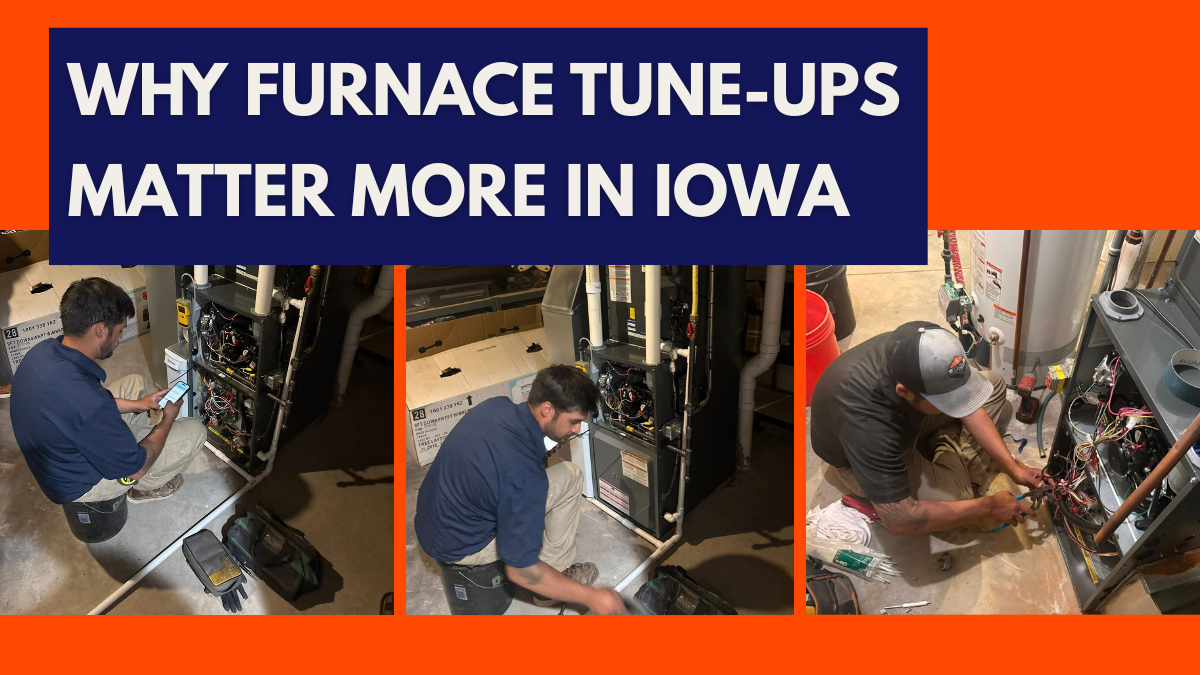
During a tune-up, Anthem technicians inspect, clean, test, and adjust the components that take the most stress in cold weather.
That includes:
Burners and flame sensors
Blower motors and belts
Electrical connections
Gas pressure and combustion
Heat exchanger safety
Thermostat accuracy
Your technician walks you through what they found and what can wait, so you decide what gets fixed.
These checks matter more here because Iowa winters don’t forgive neglected systems.
Skipping Maintenance Costs More in Cold Climates
In warmer states, skipping maintenance might only cost comfort. In Iowa, it often costs money.
Here’s what we see:
A tune-up gets skipped
A small issue goes unnoticed
A deep freeze hits
The furnace fails under load
Emergency repair costs $800–$1,500
And that doesn’t include hotel stays, space heaters, or frozen pipe damage.
A tune-up costs a fraction of a single emergency visit. It’s also the visit most likely to catch a worn part before a cold snap does.
If you’re unsure whether your system is still reliable, we break it down clearly here: How to Tell If Your Furnace Needs Repair or Full Replacement
Iowa Homes Often Run Older Furnaces Longer
Another factor that makes tune-ups more important in Iowa?
Many homes rely on older furnaces.
It’s common to see systems:
12–20 years old
Running original parts
Maintained inconsistently
Still expected to handle brutal winters
Older systems can work well, but only if they’re maintained.
Without regular tune-ups, older furnaces are far more likely to:
Lose efficiency
Develop safety issues
Fail during peak cold
Maintenance buys time, reliability, and peace of mind.
Furnace Efficiency Matters More When Heat Runs Constantly
In Iowa, your furnace isn’t just used more; it’s used harder.
That makes efficiency critical.
A poorly maintained furnace can waste 10–30% more energy just trying to keep up.
That shows up as:
Higher monthly heating bills
Uneven temperatures
Longer run cycles
More wear on components
A tune-up restores airflow, improves combustion, and ensures your system isn’t burning extra fuel just to maintain comfort.
If you’re also exploring efficiency upgrades, mini splits can sometimes help offset furnace load in specific areas.
Why “I’ll Wait Until It Breaks” Is Riskier in Iowa
In warm states, waiting until failure might be inconvenient.
In Iowa, it can be dangerous.
When furnaces fail during extreme cold:
Repair wait times increase
Emergency rates may apply
Parts availability can be limited
Homes cool rapidly
This is especially risky for:
Families with young children
Elderly homeowners
Homes with plumbing on exterior walls
Preventative maintenance reduces the odds you’ll ever need emergency service in the first place.
If you do face a sudden outage, here’s what to check immediately.
Tune-Ups Also Improve Safety in Iowa Winters
Safety gets overlooked until it’s urgent.
During long heating seasons, furnaces face:
Increased combustion stress
Higher carbon monoxide risk
Cracks that expand with temperature swings
Loose gas connections or a sticking gas valve
Dirty burners and blocked vents that raise fire risk
A tune-up includes safety checks that protect your family, not just your comfort.
These inspections are especially important before winter starts and anytime you notice:
Unusual odors
Headaches or dizziness indoors
Soot around vents
Frequent shutdowns
If your furnace hasn’t been inspected recently, don’t assume it’s safe just because it’s running.
Signs Your Furnace Needs a Tune-Up Now
You don’t have to wait for fall if your furnace is already telling you something. Call for a tune-up if you notice any of these:
Some rooms run warm while others stay cold
Banging, rattling, or squealing when the furnace starts or runs
Heating bills climbing with no change in the weather or your settings
The furnace turning on and off every few minutes
A yellow or flickering burner flame instead of a steady blue one
A yellow flame can point to a combustion problem, so call about that one right away.
Why Iowa Homeowners Benefit From Maintenance Plans
Because Iowa winters are predictable, many homeowners choose ongoing maintenance plans instead of one-off tune-ups.
A maintenance plan helps by:
Locking in scheduled fall inspections
Providing priority service during peak seasons
Catching issues early, year after year
Reducing long-term repair costs
Anthem’s Comfort-Shield plan includes two tune-ups a year, so the fall furnace visit is already on the calendar.
Anthem’s preventative maintenance options are designed specifically for Central Iowa homes and weather patterns.
You can learn more here.
Why do furnace tune-ups matter more in Iowa than in warmer states?
Iowa winters are longer, colder, and more demanding on heating systems than in warmer climates. Your furnace runs harder and more often, sometimes for months straight. A tune-up helps make sure it can handle that workload without breaking down during the coldest days of the year.
How often should Iowa homeowners get a furnace tune-up?
Once a year, ideally in early fall before temperatures drop. This gives technicians time to catch small problems before they turn into mid-winter breakdowns, when emergency repairs are harder to schedule and more expensive.
What can happen if I skip a furnace tune-up in Iowa?
Skipping maintenance can lead to higher heating bills, uneven heat, poor air quality, or sudden furnace failure during freezing weather. In extreme cold, even a short breakdown can risk frozen pipes and emergency heating repairs.
Is a furnace tune-up worth the cost for Iowa winters?
Yes. A tune-up often costs far less than an emergency repair or system replacement. Regular maintenance can improve efficiency, extend the life of your furnace, and help prevent surprise breakdowns during Iowa’s coldest months.
The Bottom Line: Iowa Isn’t the Place to Skip Furnace Maintenance
In warmer states, tune-ups are optional.
In Iowa, they’re essential.
Our winters push furnaces to their limits. Regular maintenance is the difference between:
Comfort and stress
Predictable costs and surprise bills
Reliability and emergency calls
If your furnace hasn’t been tuned up yet this season, now is the time.
Schedule Your Furnace Tune-Up Before Winter Pushes Back
Cold weather doesn’t wait.
And your furnace shouldn’t either.
Book a furnace tune-up or repair with Anthem Heating & Cooling
Stay warm. Stay ready. Iowa weather waits for no one.